%20(24).png)
In an era where youth culture is fragmented into hundreds of micro-communities, brands can no longer rely on broad, one-size-fits-all marketing. Our recent study, the PION100 UK, offers rare insight into how young people really feel about brands in 2026.
Most marketing platforms make you rent your audience and data, but own nothing. Pion does things differently. We help brands run offer programs, instantly verify 10 consumer groups, keep full ownership of their data, and access millions of verified, high-value audiences.
At the heart of these audiences is Gen Zalpha: a generation sitting between Gen Z and Gen Alpha, and one of the most pragmatic yet.
More than a brand ranking, the PION100 reveals how Gen Zalpha navigate identity, money, culture, and loyalty in a complex digital world.
We dive into the biggest learnings below.
PION100: Behind The Research
Unlike traditional brand rankings, the PION100 is built on emotional sentiment. Over 1,000 brands were evaluated by 2000 UK 16–24-year-olds based on love, like, dislike, hate, or indifference.
Crucially, “no feeling” emerged as the worst outcome. In a world of infinite choice, invisibility is more dangerous than criticism. Young people actively curate what they care about—and what they ignore.
The research also challenges the myth that students are disengaged or cynical: 87% of respondents had positive feelings toward brands.
They do want relationships with companies—they’re just highly selective.
This framework helps marketers understand that winning isn’t about being everywhere, but about being emotionally relevant to the right communities.
Brands as Identity Anchors In Youth Culture
Brands are no longer just products. They are tools for self-expression.
For young people navigating an increasingly AI-influenced world, brands help signal values, beliefs, and belonging.
From trainers to takeaway choices, today’s youth use brands to connect with “their people.” In a landscape of niche aesthetics, fandoms, and online tribes, identity is built through consumption. This makes brands part of personal storytelling.
The best brands, according to Gen Zalpha, are trusted, reliable, sometimes imperfect, but reflective of who you are. They don’t try to own every trend—they become emotional anchors in a chaotic cultural environment.
“To be a brand in 2026 is a bit like family. You may not always agree with them and you may fall out with them, but eventually you'll win them back round. And most importantly, you want to look at that brand and see a reflection of who you are and what your values are.” -Rick Jackson, Head of Content at Pion
For brands, this means relevance is no longer about mass appeal, but about meaningfully fitting into the new identity systems that young people use to define themselves.
Why “Noticing” Matters More Than Awareness
One of the report’s first questions was deceptively simple: “Which brands did you notice in 2025?”
Noticeability today is not the same as reach. In an era of algorithmic feeds and private consumption, visibility depends on cultural relevance, not just media spend.
Nike and Adidas demonstrated two contrasting approaches.
Nike embedded itself in mainstream culture through major campaigns and events.

Meanwhile, Adidas leaned into subcultures, music, and local football scenes.

Both strategies worked because both were unapologetically consistent. They didn’t try to speak to everyone at once. Instead, they owned specific cultural lanes.
For brands navigating fragmented subcultures, this shows that clarity beats coverage: choose your cultural territory and commit to it.
Visibility vs. Love: The Shein and Primark Lesson
Shein and Primark dominated youth visibility, but with very different emotional outcomes.
Shein’s influencer-driven, discount-heavy model flooded social feeds. It was everywhere. Yet its “love score” was surprisingly low. High exposure didn’t translate into deep loyalty.
Primark, by contrast, built emotional connection through physical space. Stores became social hubs where young consumers could gather with friends and browse. Belong. It solved real-world needs in a digital-heavy generation.
The lesson is clear: Attention is cheap but affection is rare.
Being part of lived experience matters more than dominating feeds.
For brands, this reinforces that selective, meaningful engagement is what drives long-term relevance.
Four Youth Personas That Redefine Targeting
The PION100 identified four core spending personas based on income source and spending mindset:
- Supported but Cautious
- Independent and Cautious
- Parent-Supported Splurgers
- Work Hard, Play Hard
%20(23).png)
What’s striking is that most young people are intentional, not reckless. They research, compare, and evaluate brands within their peer networks and digital communities.
These personas cut across traditional demographics. Two students of the same age and location may behave completely differently depending on funding and priorities.
Surface-level segmentation fails because brands need to understand motivation, not just age brackets.
Greggs vs. Netflix: Why Utility Beat Aspiration
.gif)
{{ctaNeon}}
Perhaps the biggest headline: Greggs was ranked the number one youth brand in the UK. Yes, above Netflix, YouTube, and Nike.
A local foot-on-the-go brand beat global entertainment giants.
Why? Because Greggs delivers consistent value, accessibility, and cultural relevance without pretending to be something else. It’s affordable, omnipresent, and genuinely useful.
Young people facing financial pressure prioritise brands that “work” over brands that impress. Function beats fantasy.
“When the most loved brand isn't aspirational, it isn't a digital native brand, it isn't trying to be cool... It means something fundamental has changed in the mindsets of young people today. In what they want and what they value and what wins their hearts. They want function and affordability.”
–Rick Jackson, Head of Content at Pion
When dealing with the strict budgets and fleeting trends amongst young consumers, affordability and reliability become powerful unifiers.
For youth marketers, this shows that solving everyday problems can build stronger loyalty than chasing prestige.
Authenticity Over Aspiration in Micro-Communities
Authenticity now outperforms aspiration.
Young audiences are highly sensitive to inauthenticity, especially in niche communities. Forced slang, trend-chasing, or superficial activism is quickly rejected.
McDonald’s “language-first” campaign was so successful because it reflected how young people actually talk—without moralising or posturing.
In 2026, credibility is earned locally. Each community evaluates brands on its own terms.
This means brands must learn to listen before speaking, and adapt tone without losing core identity.
What Youth Marketers Must Take Away from the PION100
Across the report, five key lessons emerged:
- Consistency beats hype
- Utility beats excitement
- Identity beats imitation
- Gray space beats rigid categories
- Intentional spending beats impulse buying
Together, they form a blueprint for navigating fragmented youth culture.
Young consumers aren’t chaotic—they’re strategic. They build loyalty slowly, through repeated proof of value and relevance.
For marketers struggling with disappearing mass audiences, this is both a warning and an opportunity.
Get the Full Insights in the Report
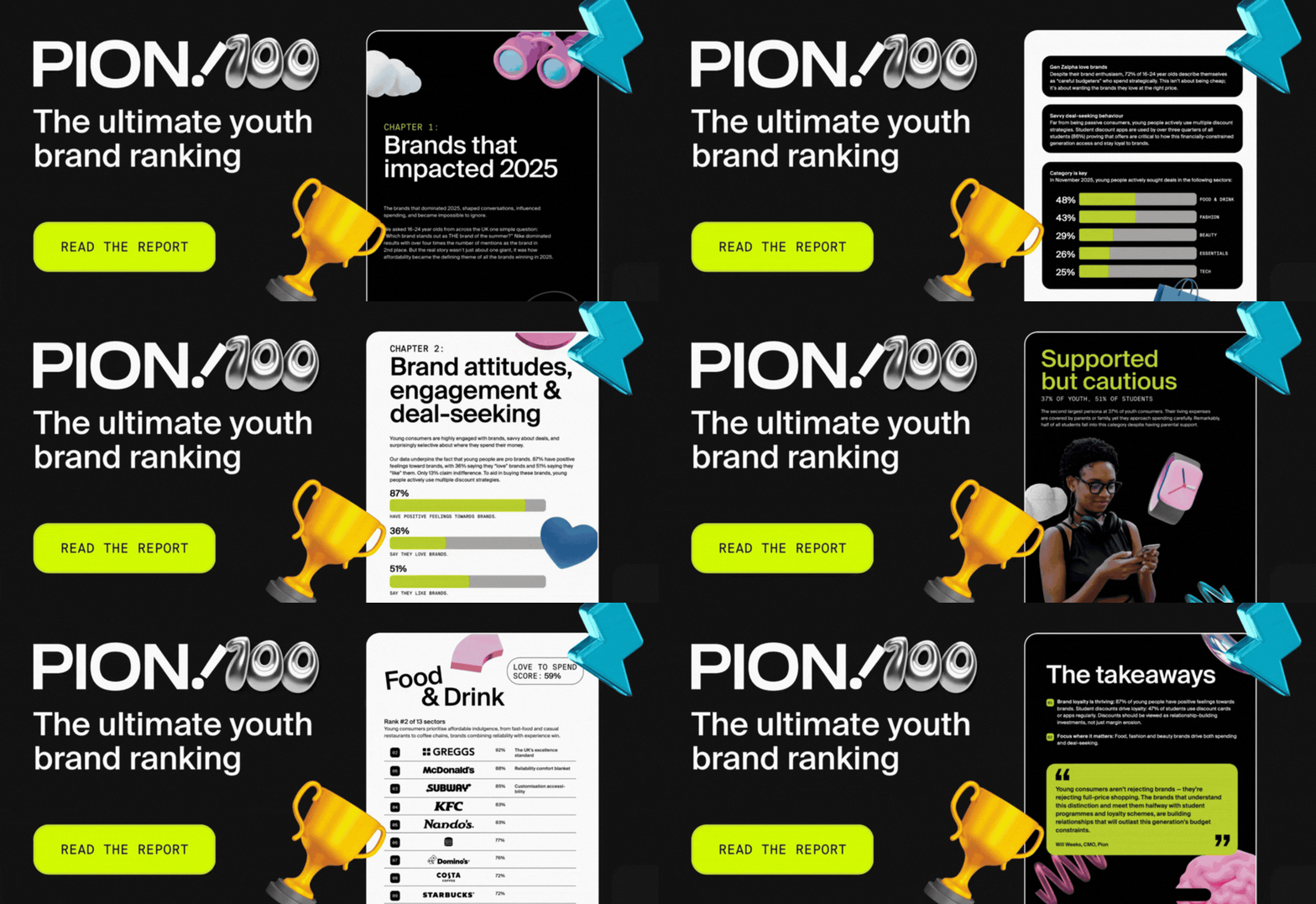
We’ve only scratched the surface of the data behind the PION100 UK Report.
The full report dives deeper into:
- Subcultural alignment
- Persona-specific brand preferences
- Emotional loyalty drivers
- Category disruptions
- Long-term youth trends
For brands serious about cutting through fragmentation and building lasting youth relevance, the PION100 isn’t optional—it’s strategic infrastructure.
Download the full report to understand not just who young people are today, but how to become part of their story and climb up their rankings next year.
{{ctaLight}}
Read next...
%20%20weekly%20briefing%20(32).png)
%20%20weekly%20briefing%20(27).png)
%20%20weekly%20briefing%20(12).png)
Download the PION100
Want to discover where you rank?
Ready to start owning your growth?