%20%20weekly%20briefing%20(7).png)
Culture is not the same as trends. If your brand is treating them interchangeably, that's where the problem starts.
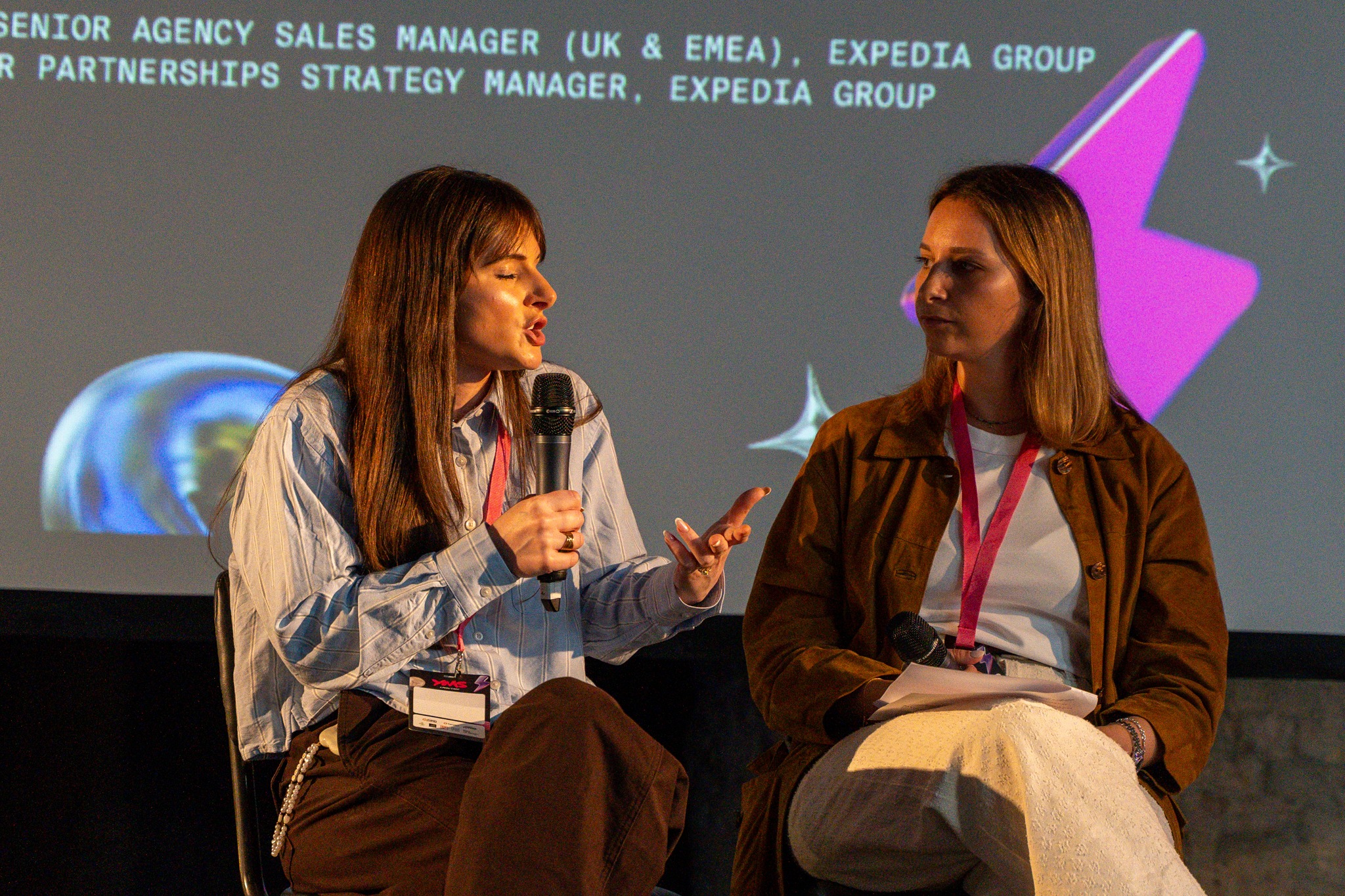
At YMS London 2026, Perla Bloom, Global Senior Strategy Manager at Expedia Group, joined host Eleonora Sceusi for a fireside chat on how to make a functional brand culturally relevant, and why getting comfortable with failure is part of the process. The conversation cut through received wisdom about cultural marketing strategy and got to something more useful: how do you build a brand that means something, in a way only you could?
Here's what stood out.
Culture Is Deeper Than Trends, and Your Brand Platform Has to Come First
Perla was direct on this from the start. There's a crucial difference between fleeting internet discourse and enduring cultural plays that span communities with their own values, rituals, and belief systems. Both have a role, but you need the foundation before you add the layer.
"You need to understand who you are as a brand because if you don't, you're just floating about. People aren't going to intrinsically associate what you did in that cultural space back to your brand." Perla Bloom, Global Senior Strategy Manager, Expedia Group
The two brand examples she used illustrate this well. Fern, a perfume brand built around once-in-a-lifetime seasonal scents, has deeply aligned itself with the folk community, investing in their music, funding events, and building the Fern Foundation around them. It runs deep because it genuinely matches the brand's platform.
Then there's Loewe, whose identity is built on craft and quirky precision. Their trend-reactive social media presence works specifically because it expresses that same brand platform in a different register. They're not jumping on trends for the sake of it. They're using trends to push a specific element of who they already are.
This distinction matters for any brand thinking about tapping into Gen Z subcultures and passion points. Brands that do it well aren't borrowing someone else's culture. They're finding communities where their own story genuinely fits, and showing up consistently within them.
Prepared Spontaneity: A Framework for Staying Culturally Agile
One of the most practical ideas from the session was what Perla called "prepared spontaneity."
The speed of internet culture makes reactive marketing feel essential, but for most in-house brand teams it's almost impossible to move that fast in a way that stays on-brand. The answer isn't to try harder. It's to plan smarter.
The idea is to build annual criteria for what cultural moments, communities, and conversations your brand will and won't engage with. Once that framework exists, reacting quickly becomes much easier because you've already done the thinking.
"It is a strategy to choose not to do something as well as choosing to do something. That's one of the biggest lessons I've learned." Perla Bloom, Global Senior Strategy Manager, Expedia Group
This also helps with internal stakeholder buy-in. Perla's advice was to pair a clear North Star vision with a phased testing plan showing what you'll achieve year by year. As she noted:
"To get rid of risk-aversion, you need to show value and continued value." Perla Bloom, Global Senior Strategy Manager, Expedia Group
The Pion100 research reinforces why long-term thinking pays off. Young people are quick to spot inauthenticity and slow to forgive it. Brands that show up consistently in the right cultural spaces build lasting loyalty. Those that chase trends without a foundation tend to look exactly like what they are.
Entertainment Marketing Is the Next Frontier
The third thread running through the session was the growing role of entertainment in brand marketing. With so much fast-moving, product-focused content saturating feeds, especially on TikTok, audiences are becoming desensitised. The brands cutting through are the ones creating content people actually want to watch and share.
Perla pointed to Adidas' recent World Cup campaign as a strong example: beautifully directed, emotive, and launched like a piece of entertainment with a trailer the day before. M&S's weekly YouTube livestream, which has modernised the QVC format for a new audience, is another. And Argos has built genuine traction through original social content including mockumentaries that people return to week after week.
The key insight is that you don't need a million-pound IP partnership to do this. The brands winning at entertainment marketing are increasingly creating their own IP, taking lessons from how the entertainment industry plans content rollouts, and applying that discipline to brand storytelling. That means thinking in content arcs, not just individual posts.
For brands wanting to reach young audiences through passion points and community experiences, entertainment marketing offers a real opportunity to show up in ways that feel native rather than intrusive.
The Bottom Line on Cultural Marketing
Culture is not a trend, and it's not exclusive to Gen Z.
"If you're doing cultural marketing that is really good and impactful, it transcends demographics. It can always be that deep." Perla Bloom, Global Senior Strategy Manager, Expedia Group
The brands that get cultural marketing right will be the ones who know who they are, choose their cultural plays with intention, build frameworks that let them move fast without losing themselves, and create content worth sharing. That's not a trend. That's a strategy.
{{ctaNeon}}
Read next...
%20_%20weekly%20briefing.png)
%20_%20weekly%20briefing%20(1).png)
%20_%20weekly%20briefing%20(1).png)
Want to understand what Gen Z really values in the brands they love?
Ready to start owning your growth?