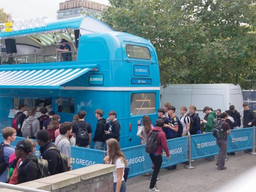
Greggs x Student Beans: How a bus tour won Freshers’ loyalty
Carla Pelosoff · 19 October 2026


Food isn't just fuel for Gen Z, it's comfort, identity, and one of the only things keeping them sane in a noisy world. Which should make food and drink brands feel pretty good. The catch is that Gen Z is watching every pound they spend, and “I love this brand” doesn't always translate into “I'll pay for it.”
If you market a food or drink brand to young consumers, that gap is the challenge sitting on your desk right now. How do you turn genuine affection into actual spend, when your audience is more budget-conscious than any generation before it?
According to the PION100 Wave 2 report, food and drink is the sector Gen Z loves spending on most, with 62% saying it's where their money goes first. But love doesn't mean loose spending. 73% of young consumers now budget carefully, putting an average of $200 toward the things they decide are genuinely worth it.
That carefulness runs deeper than wallets. Gen Z splits into four distinct spending mindsets: spending but cautious, independent cautious, parent-supported splurgers, and work-hard-play-hard. Financial pressure isn't just reshaping how they shop, it's reshaping how they live too: 66% now prefer socialising at home over spending money on bars, clubs and events.
The takeaway for brands: Gen Z hasn't lost interest in food and drink, they've just raised the bar for who gets their money.
The good news is that Gen Z is easier to find than ever, if you know where to look. Per PION100 Wave 2, the discovery channels that matter most are organic feeds and explore pages, paid ads, influencers and creators, word of mouth, online marketplaces, and search engines.
In food and drink specifically, organic content and paid social do the heaviest lifting. 44% of young consumers discover new brands through content in their feed, and 38% through paid ads, with TikTok and Instagram still the first place discovery happens. Influencers and creators aren't far behind, driving 34% of discovery, with word of mouth close at 22%. Our Big Love, Small Brands report found creators alone can drive around 35% of discovery for food and drink brands.
The pattern is clear: organic and creator-led content doesn't just reach Gen Z, it helps brands build a stronger connection with young consumers before a single ad does, and that connection is what turns love into spend.
Starbucks is the standout comeback story on this year's PION100, jumping 18 spots from #40 to #22 and earning a 74% love/like score from young consumers. Their strategy wasn't reinvention, it was returning to the basics that made them Starbucks in the first place: more staff, faster drinks, comfier cafes.
Even a small, human touch, baristas writing personal notes on cups, went viral and pulled Gen Z back in. Sales grew 7.1%, and both traffic and spend rose for the first time in two years.
The lesson for brands chasing Gen Z's spend isn't “innovate harder.” It's “get back to what made you worth loving.” Authenticity beats reinvention, every time.
Student discounts are used by 54% of young consumers, and food and drink is the sector they hunt deals in hardest, with 34% actively seeking them out. Setting up an exclusive deal for young consumers tells Gen Z you understand their budget, not just their business.
Gen Z can spot a brand chasing trends instead of living its values. Protect what made you successful rather than reinventing it every quarter.
Organic content and creator partnerships build the kind of credibility paid ads can't buy, and they put your brand directly in front of Gen Z without feeling like an interruption.
Gen Z isn't pulling away from food and drink brands, they're getting pickier about which ones deserve their money. The brands that stay consistent, show up authentically on social, and make their price point worth the splurge are the ones winning Gen Z's wallet share.
Carla Pelosoff · 19 October 2026

Emily Jean-Mary · 15 October 2026

Amelia Lisco · 14 October 2026