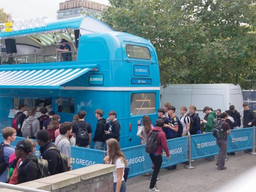
Greggs x Student Beans: How a bus tour won Freshers’ loyalty
Carla Pelosoff · 19 October 2026


Gen Z are a misunderstood bunch. Everyone has had their say about this generation. We’re told they’re addicted to social media, frivolous with money, lazy, radical activists – the list goes on. However, at Pion, we know there’s more to the story (and we have the data to prove it, too).
In this blog, we’re going to go on a journey of myth-busting. We’ll share 10 things that brands and individuals constantly get wrong about Gen Z, and some lesser known facts that are actually true.
So, strap in. The results might surprise you…
FALSE!
A lot of people think that these young things are partying harder than any other generation. Sadly, they’d be sorely mistaken. In fact, Gen Z have been labeled as “Generation Sensible” for their love of early nights, wellness and aversion towards binge drinking.
We checked this out in our most recent Youth Trends Report, looking at how many young consumers were choosing to ditch the booze and embrace sober curious lifestyles. A massive 60% of Gen Z claimed they’d abstain due to health and wellness reasons. Fair play – guess they’ve gotta make that 7am HIIT class somehow.
Watch on X (Twitter)FALSE!
Gen Z are passionate about sustainability and care deeply about protecting the environment. In fact, an overwhelming 93% of Gen Zers that we surveyed said brands should care about sustainability. They’re also willing to put their money where their mouth is, with 77% of Gen Z sharing they’d shop with a brand who made sustainable choices.
TRUE!
Gen Z’s sense of humor is like none other.
Often cos-playing as a coping mechanism (because how else are they meant to navigate the doom and gloom around them?!), they thrive on cynical jokes and constantly evolving meme culture. From throwing up a peace sign while crying to summarizing their traumatic life events through “it is what it is”, this cohort are the most unserious yet.
Many brands have capitalized on this niche sense of humor to reach Gen Z audiences. Companies like Duolingo, Ryanair and McDonald’s have all been praised for their satirical social media presences, often crafting a whole new brand identity online.
Watch on TikTokFALSE!
This claim comes off a 2014 prediction that unanimously agreed Gen Z are set to be the most “individualistic generation yet”. Unfortunately, this assumption is wrong. While Gen Z are undoubtably secure in crafting their own identities, they still yearn for a sense of belonging. They want to be active, not passive, in the communities they’re part of. Enter the individual collectivist: connected, but still embracing individuality in all aspects.
TRUE!
This shouldn’t be a major surprise to anyone. Gen Z have lived through some of the biggest world events we’ve ever seen: a pandemic, war in Ukraine, a global cost-of-living crisis, the BLM movement. They’re ready to ignite change, with a massive 74% describing themselves as an activist.
They’re using both online and offline channels to do so, with many attending IRL protests and others using social media to create noise around various injustices.
Watch on InstagramTrue AND false!
Gen Z are inundated with influencers. They’re everywhere: TV screens, billboards, popping up every two minutes on your FYP page…
This saturation has led to influencer engagement rates dropping in some sectors. However, importantly, they’re rising in others. Small-time creators are becoming the favored choice for young consumers due to their perceived authenticity. Macro influencers have had a slightly harder time of it. Trends like “Eat The Rich” and #DeInfluencing has reduced macro-influencer credibility. Young people crave relatability – something big time influencers no longer have.
Watch on InstagramWe explored the sentiment behind this in our recent Youth Trends Report, looking at attitudes towards macro-influencers. Less than half of our respondents believe that being an influencer is a credible career choice, while 56% believe that influencers receive unfair advantages. (Well, when you think about those all-expenses-paid trips to Dubai, it’s hard to not feel just a LITTLE envious).
FALSE!
Gen Z’s purchasing power shouldn’t be underestimated. In fact, last year, their spending power was estimated to sit at a massive $360 billion. However, the cost-of-living crisis has meant that Gen Z are feeling the pinch more than other generations.
This doesn’t mean they’re cutting out spending completely. If anything, they’re searching for value, with 45% of students looking for a discount every single time they make a purchase.
For success with Gen Z, it’s clear that incentivization is key. Consider offering a student discount, or making your discounts stackable (because who isn’t swayed by a discount and free delivery?!). If you want to learn more top tips about securing Gen Z loyalty during economic turmoil, check out our free guide.
FALSE!
Contrary to popular belief, Gen Z aren’t completely obsessed with the online world. In fact, they value IRL interactions just as much as online ones. They place more emotional value on this, arguably because this in-person interaction was wrenched from them during the COVID19 pandemic.
In fact, when we surveyed Gen Zers on what they were most looking forward to in a post-pandemic world, a whopping 73% said “seeing friends”.
This isn’t to say that the online world isn’t an important place to curate connections. Gen Z uses social media to maintain friendships, build personal brands and stay up-to-date with the latest trends.
Watch on X (Twitter)FALSE!
This generation might still be finding their feet, but that doesn’t mean they’re not ready to enter the corporate world. In fact, in a mere 18 months, Gen Z will account for a third of the workforce. Businesses should be looking to attract these digital natives, who bring a technological flair and enviable social media skill set.
Gen Z bring a lot to the table, but they’re also firm on what they want in return. Young consumers are demanding increased flexibility (such as remote working), more time off and for corporations to showcase their social and environmental responsibility. Hustle culture is out, self-care is in, with 40% of Gen Z admitting they “are not willing to work beyond their regular hours if there is an important deadline”.
Watch on TikTokFALSE!
Actually, Gen Z are desperate to improve their financial literacy – it’s just the times they’re living through that makes this so difficult. The cost-of-living crisis has meant many are living paycheck to paycheck. It’s increasingly difficult to save in this scenario, with 74% of Gen Z sharing that financial constraints would be the number one barrier to purchasing a house.
Gen Z are also putting their digital skills into practice to get more money-savvy. According to our 2023 Youth Trends Report, 66% want to improve their financial knowledge. 70% shared they have learned more about finances from the internet than they ever did at school, while 48% are going to TikTok for this knowledge.
Want more like this? Sign up to our free Weekly Briefing newsletter for all the latest Gen Z insights straight to your inbox.
Carla Pelosoff · 19 October 2026
Emily Jean-Mary · 15 October 2026
Amelia Lisco · 14 October 2026